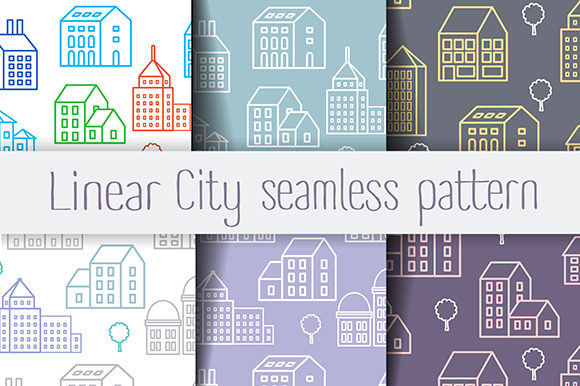
Set a Seamless Repeating Linear Pattern of Urban Buildings and Structures
Creating a seamless repeating linear pattern of urban buildings and structures is a powerful technique used in graphic design, architecture, and digital art. Whether you're designing a background for a website, illustrating a cityscape, or developing a tileable texture for 3D modeling, understanding how to set a seamless repeating pattern can significantly enhance the visual impact and efficiency of your work.
The Concept of Seamless Repeating Patterns
A seamless repeating pattern is a design that can be tiled infinitely without visible seams or breaks. When applied to urban environments, this means creating a sequence of buildings, structures, and architectural elements that can be repeated along a linear axis to form an extended scene or background. This approach is particularly useful when working with limited space or when generating large-scale visuals that require consistency and continuity.
The key to a successful seamless repeating pattern lies in careful planning and attention to detail. Each element in the sequence must align perfectly with its neighbor to ensure that the repetition feels natural and cohesive. This requires not only artistic skill but also a strong understanding of spatial relationships and visual harmony.
Key Characteristics and Practical Value
Seamless repeating patterns of urban buildings and structures are defined by their ability to maintain visual integrity across multiple repetitions. This makes them highly versatile for a wide range of applications, from web design to game development and beyond. The following characteristics contribute to their practical value:
- Consistency: A well-designed pattern ensures that each repetition maintains the same scale, orientation, and proportion.
- Flexibility: These patterns can be adapted to various formats, including vector graphics, raster images, and 3D models.
- Efficiency: Using a single pattern allows for quick generation of large-scale visuals without the need for repetitive manual work.
- Visual Continuity: A seamless pattern creates the illusion of an endless urban landscape, which is especially useful for backgrounds and textures.
These features make seamless repeating patterns an essential tool for designers and creators who need to produce scalable, consistent, and visually appealing content.
Real-World Applications and Performance
In real-world scenarios, seamless repeating patterns of urban buildings and structures are commonly used in a variety of industries. For example, in web design, they can serve as background elements for websites that feature cityscapes or urban themes. In game development, they can be used to create immersive environments that extend beyond the visible screen. Additionally, in architectural visualization, these patterns help simulate large-scale urban areas without requiring extensive modeling.
However, the performance of these patterns depends on several factors, including the complexity of the design, the resolution at which it's used, and the software or platform being utilized. High-resolution patterns may require more processing power, especially when used in real-time applications like video games or interactive media. Designers should also consider the scalability of the pattern to ensure it remains clear and legible at different sizes.
Who Benefits Most from Seamless Repeating Patterns?
While seamless repeating patterns of urban buildings and structures can be beneficial to a wide range of users, certain professionals and creators may find them particularly valuable. These include:
- Graphic Designers: Who use them to create visually engaging backgrounds and textures.
- Architects and Urban Planners: Who rely on them for conceptual sketches and visualizations.
- Game Developers: Who integrate them into environments to create expansive, immersive worlds.
- Freelancers and Small Business Owners: Who need cost-effective and efficient design solutions.
- Bloggers and Content Creators: Who use them to enhance the aesthetic appeal of their digital content.
For these individuals, seamless repeating patterns offer a practical solution that balances creativity with functionality, allowing them to focus on their core objectives without getting bogged down by technical limitations.
Quality, Usability, and Long-Term Value
The quality of a seamless repeating pattern is determined by its level of detail, accuracy, and adaptability. A high-quality pattern will maintain its integrity even when scaled up or down, ensuring that it remains visually appealing across different contexts. Usability is also a critical factor, as the pattern should be easy to implement and integrate into existing workflows.
From a long-term perspective, seamless repeating patterns provide significant value due to their reusability and versatility. Once created, they can be used across multiple projects, reducing the need for redundant design work. This not only saves time but also helps maintain a consistent brand identity or visual style.
However, it's important to note that not all patterns are created equal. Some may lack the necessary detail or flexibility to meet specific project requirements. Therefore, it's crucial to evaluate the quality and suitability of a pattern before incorporating it into your work.
Practical Recommendations and Limitations
To achieve the best results with seamless repeating patterns of urban buildings and structures, consider the following recommendations:
- Plan Ahead: Sketch out your design before finalizing the pattern to ensure alignment and consistency.
- Use Professional Tools: Invest in reliable design software that supports seamless tiling and pattern creation.
- Test Across Sizes: Preview your pattern at different resolutions to ensure it remains clear and legible.
- Consider Context: Tailor your pattern to the specific needs of your project, whether it's for print, web, or 3D modeling.
- Iterate and Refine: Be prepared to make adjustments based on feedback and real-world application.
Despite their advantages, there are some limitations to consider. Complex patterns may be difficult to tile seamlessly, especially if they contain intricate details or irregular shapes. Additionally, overly detailed patterns may lose clarity when scaled down, which can affect their usability in certain contexts.
Conclusion
Setting a seamless repeating linear pattern of urban buildings and structures is a valuable skill that can greatly enhance the quality and efficiency of your design work. By understanding the principles behind seamless repetition and applying them thoughtfully, you can create visually compelling and functionally effective designs that meet the needs of a wide range of users. Whether you're a professional designer, a small business owner, or a creative hobbyist, mastering this technique can open up new possibilities and improve the overall impact of your work.